

Phebe Novakovic and Brian Moynihan lead major American companies in very different fields: Novakovic is chairman and chief executive of General Dynamics, while Moynihan is chair and chief executive of Bank of America. Both appear in the Business Roundtable’s executive network. That establishes a professional institutional connection; it does not, by itself, establish a personal relationship or a business partnership between them.
Their careers offer a useful comparison of leadership in aerospace and defense versus financial services. There is also an important timing distinction: as of October 14, 2026, Novakovic remains CEO, but General Dynamics has announced that Danny Deep will succeed her on January 1, 2027. She will become executive chairman. Moynihan remains Bank of America’s CEO.
What connects Phebe Novakovic and Brian Moynihan?
The most straightforward documented overlap is the Business Roundtable membership directory, which lists executives from major U.S. companies. Novakovic is listed for General Dynamics, and Moynihan has his own Business Roundtable member profile.
Membership places them in the same broad business-policy network. It is a limited but meaningful connection: their companies operate in different markets, yet both executives participate in an organization concerned with the business environment.
Phebe Novakovic’s path through General Dynamics
Novakovic’s rise involved both corporate strategy and operating leadership. General Dynamics’ board biography records strategic-planning roles, leadership of Marine Systems from 2010 to 2012, and a period as president and chief operating officer in 2012. She became chairman and CEO on January 1, 2013.
Her education also crossed disciplines. She graduated from Smith College and earned an MBA at the Wharton School of the University of Pennsylvania. Her JPMorgan Chase biography confirms those qualifications and her service on that bank’s board since 2020.
Her outside directorship adds banking-governance experience to an industrial career. JPMorgan Chase is a separate institution from Moynihan’s Bank of America.
General Dynamics itself is broader than the shorthand “defense contractor” suggests. Its 2025 annual filing describes four operating segments: Aerospace, Marine Systems, Combat Systems and Technologies. The portfolio includes business aviation as well as ships, military vehicles and technology services.
This structure makes execution a particularly useful lens for understanding the chief executive’s job. The corporate center allocates capital and sets overall direction, while business units carry responsibility for their strategies and operating results. A promising order book still has to become completed work, delivered products and cash.
Brian Moynihan’s route from law to banking leadership
Moynihan’s early career was in law. He graduated from Brown University in 1981 and received a law degree from Notre Dame in 1984. A Brown Alumni Magazine profile traces his move from the law firm Edwards and Angell to FleetBoston, followed by senior roles after Bank of America acquired Fleet in 2004.
His work at Bank of America spanned several businesses rather than a single specialty. According to the bank’s governance biography, he became CEO in January 2010 and chair in October 2014. It also distinguishes an older title: his tenure as president ended in September 2025.
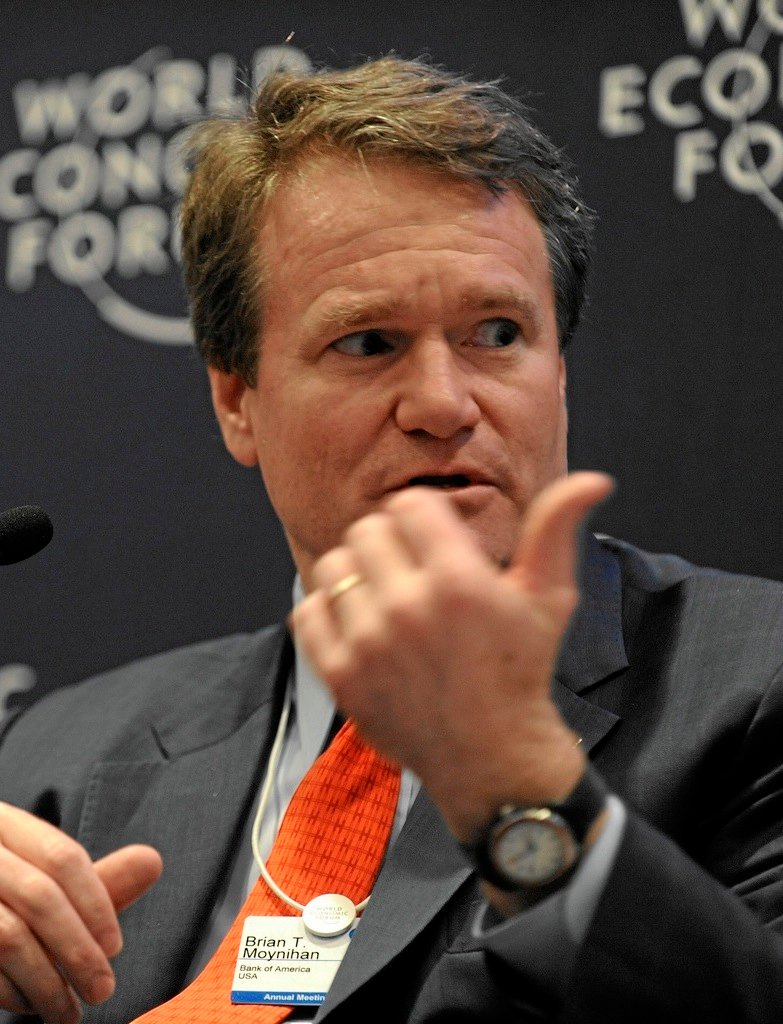
Bank of America describes its strategy as Responsible Growth. Its stated principles combine growth, attention to clients, operating within the bank’s risk framework and sustainability of the business. These are the company’s declared management principles, rather than an independent verdict on every aspect of its performance.
For a reader comparing the two executives, the important difference is the business being managed. Moynihan’s responsibilities sit within a financial institution serving consumers, businesses and investors. Novakovic’s include industrial businesses that develop, manufacture and support complex products. The same word, “growth,” therefore requires different operating evidence.
How to compare their leadership fairly
A useful comparison begins with the questions each business must answer, rather than a personality label or a ranking.
For General Dynamics, readers can examine delivery performance, execution of major programs, the relationship between orders and revenue, and whether investment produces acceptable returns. The annual report explains the company’s emphasis on execution and the allocation of capital across its businesses.
For Bank of America, readers can examine how growth fits within the bank’s stated risk limits, how it serves clients across businesses and whether its operating model remains resilient. Bank of America’s business-practices statement explicitly places risk management and governance at the center of its approach.
These are analytical criteria, not claims that one executive has outperformed the other. A fair performance comparison would need a defined period, appropriate industry measures and an explanation of the outside conditions affecting both companies. Comparing company size or a single year’s earnings would not answer that question on its own.
The succession change to understand in 2026
General Dynamics announced Novakovic’s planned transition on October 7, 2026. Its succession announcement gives January 1, 2027 as the effective date for Danny Deep to become CEO.
Reuters’ report places the change in the context of continuing demand for the company’s aerospace and defense products. Deep was already president, making the announcement an internal succession.
Until that effective date, Novakovic continues as CEO. The plan keeps her at General Dynamics as executive chairman after Deep takes over chief-executive responsibilities.
A similar distinction between executive management and board oversight appears in our comparison of Hiroshi Mikitani and James Gorman.
FAQs
Did Phebe Novakovic and Brian Moynihan work at the same company?
The career records reviewed here do not establish that they were colleagues at the same employer. Their principal executive careers are associated with General Dynamics and Bank of America respectively.
Are they founders of the companies they lead?
No. Their documented careers show them advancing into leadership roles at established companies. Neither should be described as the founder of General Dynamics or Bank of America.
Final Thoughts
The strongest comparison is about how experienced executives oversee different kinds of risk, investment and execution. Their shared business-policy network is documented, but broader relationship claims would need separate evidence. For readers following their next steps, the key dated development is Novakovic’s announced January 2027 transition.
Image credits
Cover: Phebe Novakovic (left) and Brian Moynihan (right). Phebe Novakovic: Source: CSIS; Brian Moynihan: Benjamin Applebaum / U.S. Department of Homeland Security (public domain). Separate photographs cropped, resized and combined with a TikTap logo.
Inline: World Economic Forum / swiss-image.ch / Michael Wuertenberg, CC BY-SA 2.0. Full frame retained; proportionally resized for display.


