
Photos: U.S. Department of State / Public Domain (left); Casa Rosada (Argentina Presidency of the Nation), “Macri & Quincey Davos 2018 01 (cropped)” / CC BY 2.5 AR (right). Cropped and paired; TikTap logo added.
Pedro Pizarro and James Quincey are senior corporate leaders whose careers illustrate two different management challenges: running an electric-utility parent company and leading a global beverage business. As of October 14, 2026, Pizarro is president and CEO of Edison International. Quincey is executive chairman of The Coca-Cola Company, having stepped down as CEO when Henrique Braun succeeded him on March 31, 2026.
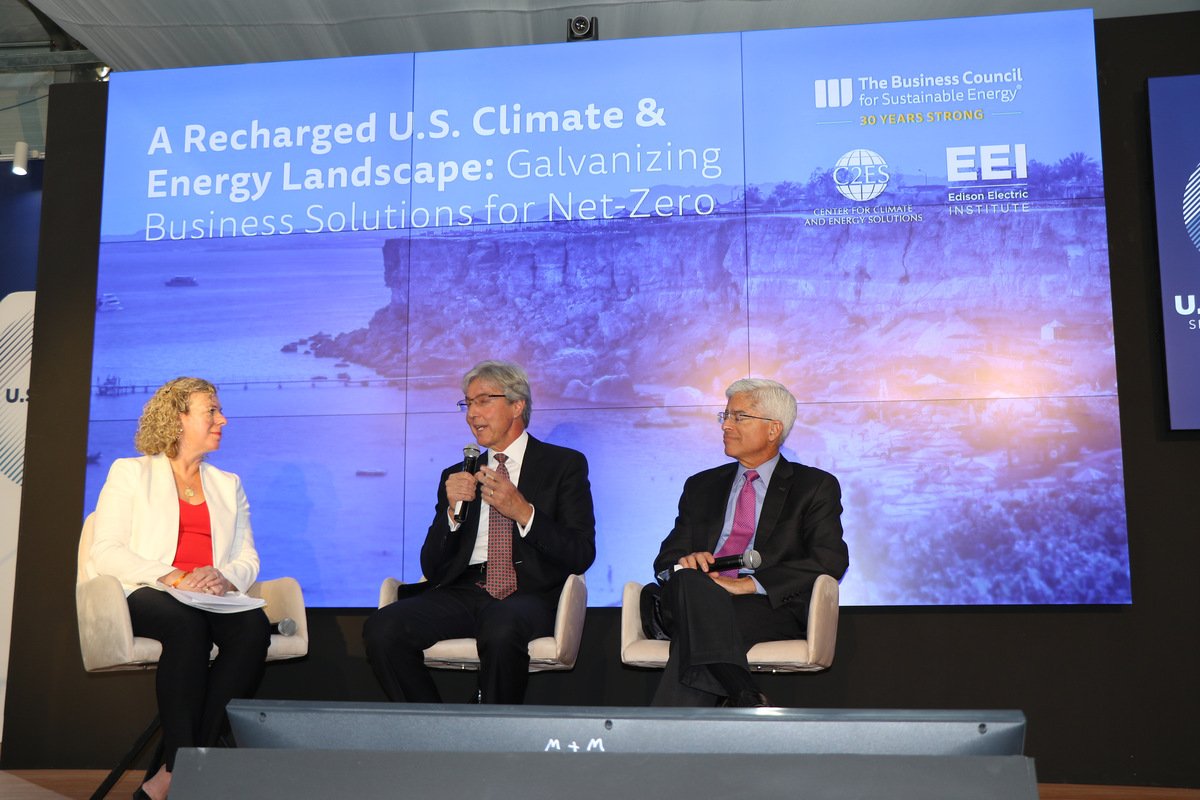
Their names do have a documented professional overlap. Yale’s program for its September 17, 2025 CEO Caucus listed both in the same session. That supports a connection through an executive forum, without establishing a commercial partnership or a personal relationship.
Their documented connection
The Yale School of Management event program lists Quincey and Pizarro among the executives scheduled to give opening remarks in a session addressing trade rules, artificial intelligence and technology competition.
The program records scheduled participation, rather than a verified account of the discussion.
Their career comparison is more substantial than that limited connection. Both have technical academic backgrounds and consulting experience, followed by long careers inside the organizations they eventually led. Their operating environments, however, ask very different things of a chief executive.
Pedro Pizarro: science, consulting and electricity
Pizarro earned a chemistry degree at Harvard and a doctorate in chemistry at Caltech. Before joining Edison International in 1999, he worked at McKinsey & Company. Edison’s official biography traces his subsequent roles at Southern California Edison and Edison Mission Energy.
He was president of Southern California Edison from October 2014 through May 2016, then became president of Edison International. His appointment as the parent company’s CEO followed in October 2016.
The distinction between the two organizations matters. Edison International is the parent of Southern California Edison, commonly abbreviated SCE. Pizarro’s current title belongs to the parent company; his earlier SCE presidency should not be presented as his current job.
For more on utility-company leadership, see the Patricia Poppe sections of our Ray Dalio and Patricia Poppe profile.
His career moved from scientific study into consulting and then operating businesses. Today, the most consequential questions for Edison concern infrastructure decisions and the company’s responsibilities to the communities it serves.
James Quincey: international operations and a global brand system
Quincey earned a degree in electronic engineering at the University of Liverpool and worked in consulting at The Kalchas Group. He joined Coca-Cola in 1996 and progressed through Latin American and European leadership roles before becoming president and chief operating officer in 2015.
Coca-Cola’s current board biography records his appointment as CEO in 2017 and as chairman in 2019. His CEO tenure ended in 2026, but his role at the company continued as executive chairman.
Understanding the business requires looking beyond a bottle bearing Coca-Cola’s name. The company describes the Coca-Cola system as the company and its bottling partners. The parent develops concentrates and syrups and supports brand marketing; bottlers mix, package and distribute finished drinks. Coca-Cola says it does not own, manage or control most local bottling companies.
That division of responsibilities makes partner coordination central to understanding the business. A beverage company’s leadership cannot be assessed simply by treating every factory, delivery route and retail interaction in the system as a directly managed parent-company operation.

Where their responsibilities differ
The most useful comparison is between essential infrastructure and consumer choice.
For an electricity business, the central questions include whether infrastructure operates safely, whether service is reliable and how necessary investment affects customers. For a beverage business, the questions include whether products meet changing preferences and whether brands and distribution partners work effectively together.
Their work also involves different forms of coordination. Edison’s public materials discuss grid-hardening measures, equipment inspections and wildfire mitigation. Coca-Cola’s system description emphasizes the relationship between the company, local bottlers and the businesses that sell beverages.
Neither model produces a simple “better leader” verdict. That would require consistent measures, a defined period and evidence of results, including setbacks. Comparing an electricity provider with a beverage company without accounting for their different obligations can make an impressive-looking comparison misleading.
Edison’s wildfire responsibilities are central to the current picture
Safety and accountability are immediate issues for Edison and the communities its utility serves.
On August 4, 2026, the Los Angeles County Fire Department announced the findings of its joint investigation with CAL FIRE. Investigators concluded that electrical arcing on an out-of-service SCE tower caused the Eaton Fire, which began on January 7, 2025. The county’s announcement reported 19 deaths and more than 9,000 homes and businesses damaged or destroyed.
Responding to the report, SCE spokesperson Kathleen Dunleavy said the utility was reviewing it and had taken its potential role seriously from the beginning, according to Associated Press reporting. The county’s August announcement also said the district attorney’s office was reviewing the evidence. The cause finding concerns SCE equipment; it is distinct from a judicial determination of individual responsibility.
SCE’s May 2025 announcement of its proposed 2026–2028 wildfire mitigation plan described covered conductors, undergrounding, inspections and detection technology. Those were planned measures in that announcement. The announcement alone does not demonstrate completion or prove that wildfire risk has been eliminated.
For readers assessing leadership, this distinction is fundamental: investment plans, actual implementation and demonstrated safety outcomes are separate things.
Quincey’s 2026 transition changes the comparison
Coca-Cola announced the succession decision in December 2025. Its regulatory filing specified March 31, 2026 as the date Braun would become CEO and Quincey would become executive chairman. The company’s current biographies identify both in those roles.
The pair now occupy different stages of executive leadership. Pizarro remains chief executive of Edison International; Quincey’s present role is board leadership as executive chairman.
Quincey remains at Coca-Cola while Braun holds the chief-executive role. That gives the company continuity of experience alongside a change in its top operating leadership.
FAQs
Do Pizarro and Quincey have the same educational background?
Both studied technical subjects, but their qualifications differ: Pizarro studied chemistry through doctoral level, while Quincey’s degree is in electronic engineering. It would be inaccurate to describe them as having identical training.
What does the Yale program show?
It establishes that an event program listed them in the same session. It does not establish a shared company, a joint project or what occurred outside the published program.
Who runs Coca-Cola now?
Henrique Braun is Coca-Cola’s chief executive officer. Quincey remains executive chairman. Articles using an older “chairman and CEO” title for Quincey need to be read in their historical context.
Final Thoughts
Pizarro and Quincey make a useful comparison because similar career ingredients led to different kinds of responsibility. The distinction is especially clear in 2026: Edison faces consequential questions about infrastructure safety and public accountability, while Quincey has moved into executive-chairman duties following Coca-Cola’s CEO succession. Their documented forum overlap provides context, but the value of the comparison lies in understanding their actual roles and the different businesses behind them.


